
Gender Liberation Movement’s next phase of resistance
A year into building Gender Liberation Movement, we’ve learned that fighting anti-trans politics requires strategy, disruption and a bold new vision for gender justice.
A year into building Gender Liberation Movement, we’ve learned that fighting anti-trans politics requires strategy, disruption and a bold new vision for gender justice.
Words by Eliel Cruz
Photography by Alexa Wilkinson
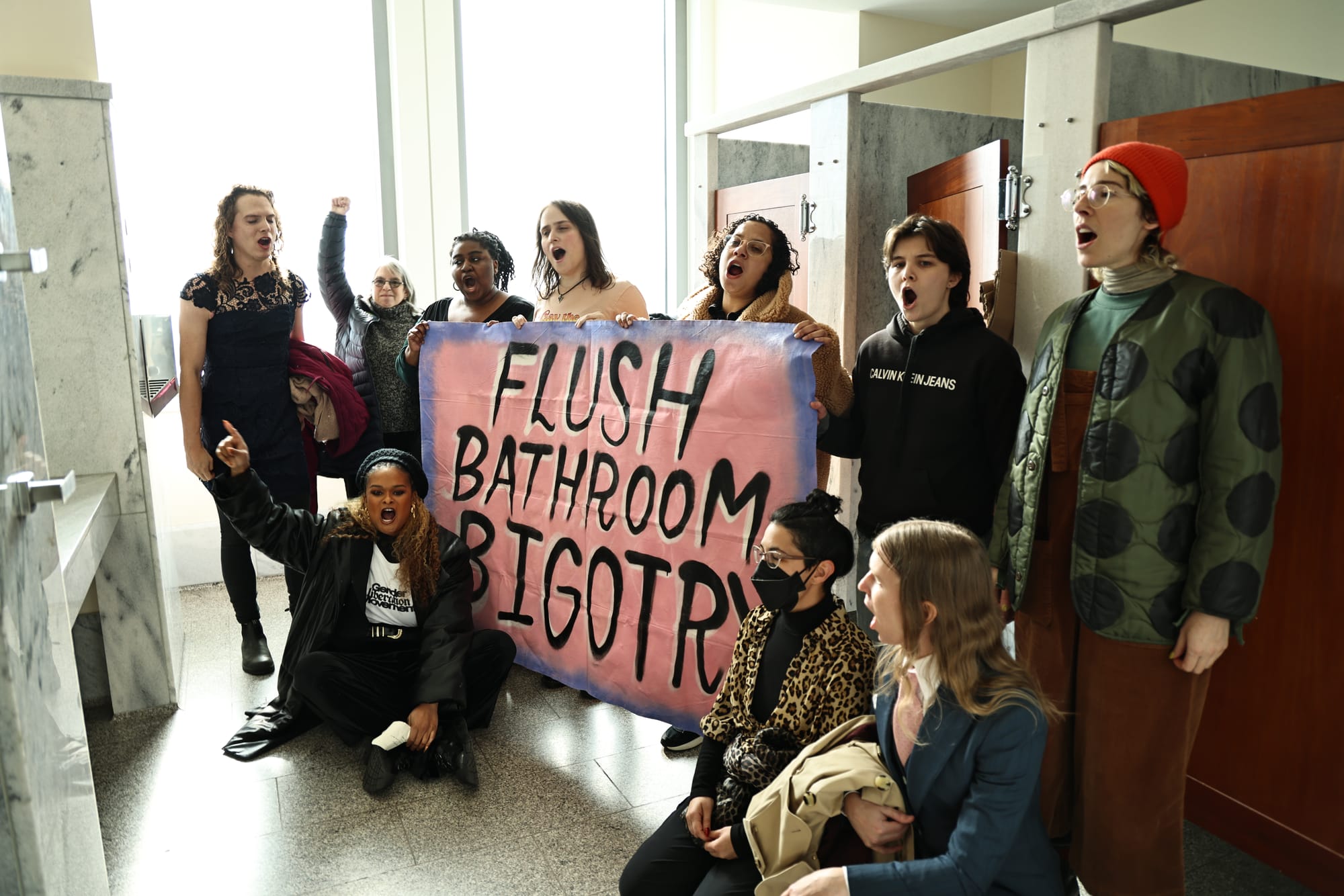
A little over a year ago, I did something I’ve never done as a community organizer: I was arrested alongside fourteen others in a “Bathroom Sit-In,” protesting anti-trans bathroom restrictions on Capitol Hill. Rep. Nancy Mace had begun her switch-up from a supposed LGBTQIA+ ally to a hardline bigot, targeting then–incoming congresswoman Sarah McBride and introducing rules that would bar all trans people from using restrooms in government-owned buildings. She even came outside of the Capitol Police headquarters where we were being held, megaphone in hand, and began to spew anti-trans slurs that have become commonplace for her over the last year.
I’ve had other opportunities to risk arrest, but have always played a “yellow” role, supporting those who put their bodies on the line, documenting the action, and working with media to get coverage of the protests. But as the levels of anti-trans attacks escalated, I felt compelled to fight back and take part in a storied activist history of using arrestable direct actions to make my voice heard. For me and my friends who got arrested, bathroom bigotry is not some side issue, but the inroad to a larger, expansive project to eliminate trans people from public spaces. We did the action to say: this is the line.
At the beginning of 2025, we officially launched the Gender Liberation Movement as a response to the growing level of gender-based political and cultural attacks. Co-founded by Raquel Willis and me, we are building on advocacy work we’ve been part of over the last decade, including mobilizations like the Brooklyn Liberation Marches in 2020 and 2021, which centered Black trans people and trans youth, respectively, and the Gender Liberation March in 2024, which brought together the fights for reproductive justice, abortion access, and gender-affirming care.
As movement organizers, we saw a need — and a unique space — to occupy organizing, disrupting, educating, and building narrative, cultural, and collective power to fight back in ways we wish more non-profit organizations showed up during these historic levels of legislative attacks. Below are some things that guide our organization, and things our movement should prioritize in its strategy.